1Overview
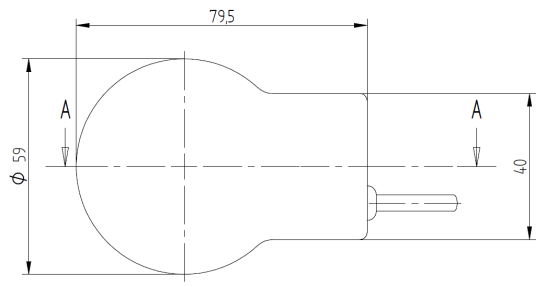
The ScintIQ™ SiPM-Based Alpha/Beta Detector is a thin, self-contained scintillation probe engineered for simultaneous or separate alpha and beta surface contamination measurements. It replaces the traditional photomultiplier tube with a silicon photomultiplier (SiPM) array, eliminating the need for a high-voltage supply while delivering comparable sensitivity in a far more compact form factor.
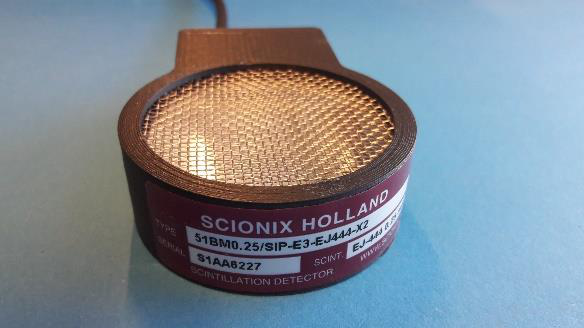
The active element is a Ø51 mm x 0.25 mm ZnS(Ag)+plastic scintillator disc (EJ-444 grade). ZnS(Ag) is the industry standard phosphor for alpha detection, and the thin plastic substrate provides the beta response. A light-tight double aluminized mylar entrance window (0.9 mg/cm²) maximizes transmission for low-energy alpha and beta particles, while a 72% transmission stainless steel grid provides mechanical protection without substantially attenuating particle flux.
An on-board temperature-compensated bias generator sets the SiPM operating voltage automatically across the full +5 V to +16 V supply range. The integrated charge-sensitive preamplifier conditions the signal before it exits via the LEMO ERA0S302 connector. No external preamplifier, high-voltage module, or bias adjustment is required. Connect power and signal, and the detector is ready.
2Features
- ZnS(Ag)+plastic scintillator, Ø51 mm x 0.25 mm (EJ-444 grade)
- SiPM array readout (J-60035-4P): no high-voltage supply required
- Built-in temperature-compensated bias generator, operating from +5 to +16 V
- Integrated charge-sensitive preamplifier for direct signal output
- Light-tight double aluminized mylar entrance window, 0.9 mg/cm²
- 72% transmission stainless steel protective grid
- Black polyester housing, fully light-tight
- LEMO ERA0S302CLL connector with flying leads (50 cm, 4-core shielded LIYD11Y cable)
- Low noise floor: <50 keV equivalent (betas) at 22 °C
- Distinct pulse timing for alpha and beta discrimination
- Low power draw: 3 mA nominal supply current
3Description
Scintillator Assembly

The detector uses a phoswich-style layered scintillator: a ZnS(Ag) alpha-sensitive phosphor deposited on a thin plastic substrate that provides beta sensitivity. The complete disc measures 51 mm in diameter and just 0.25 mm thick. This geometry keeps the overall areal density low, allowing alpha particles with ranges in the milligram-per-centimeter-squared regime to reach the phosphor with minimal attenuation.
EJ-444 is a commercially established scintillator configuration matched to SiPM and photomultiplier readout. The emission spectrum of ZnS(Ag) peaks near 450 nm, aligning well with the spectral sensitivity of modern SiPM devices.
SiPM Readout and Bias
Rather than a conventional photomultiplier tube requiring hundreds of volts, this detector uses a J-60035-4P SiPM array operating from a low-voltage regulated supply. The temperature-compensated bias generator on the detector PCB tracks SiPM breakdown voltage shifts with temperature, maintaining consistent gain across operating conditions without external adjustment.
SiPM readout brings practical advantages for field and laboratory use: ruggedness against magnetic fields, insensitivity to orientation, and compatibility with battery-powered or portable electronics. The supply requirement of +5 to +16 V at 3 mA draws less than 50 mW and is met by standard laboratory supplies, USB-derived rails, or small battery packs.
Signal Conditioning and Output
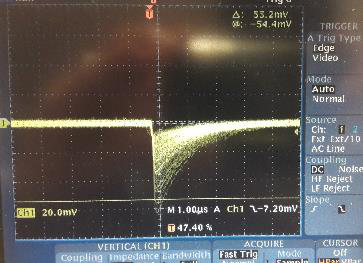
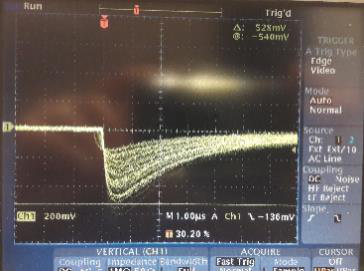
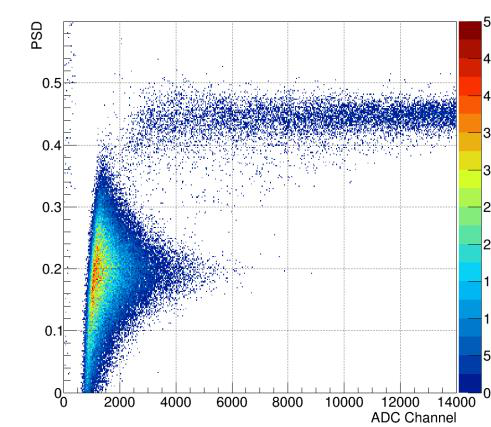
The on-board preamplifier converts SiPM charge output to a voltage pulse presented at the LEMO ERA0S302CLL connector. Alpha events produce a slower, larger pulse (rise time approximately 530 ns, fall time approximately 530 ns) with a gain of approximately 500 mV per 5.48 MeV alpha. Beta events are faster and smaller (rise time approximately 150 ns, fall time 1/e approximately 1.2 µs) with a gain of approximately 75 mV/MeV. This timing difference allows downstream electronics or software to discriminate alpha from beta events using pulse-shape analysis.
Housing and Window
The compact black polyester housing is fully light-tight, allowing operation in ambient lighting without signal contamination from optical photons. The entrance window is a double aluminized mylar film at 0.9 mg/cm², providing the low mass needed for alpha transmission while maintaining light exclusion. A stainless steel grid (72% transmission) over the window resists mechanical damage without meaningfully attenuating radiation.
4Technical Specifications
Detector
| Parameter | Value |
|---|---|
| Scintillation material | ZnS(Ag)+plastic scintillator (EJ-444 grade) |
| Active area diameter | 51 mm |
| Scintillator thickness | 0.25 mm |
| Crystal readout | SiPM Array J-60035-4P |
| Entrance window | Light-tight double aluminized mylar, 0.9 mg/cm² |
| Window protection | Stainless steel grid, 72% transmission |
| Housing | Black polyester, light-tight |
Electrical
| Parameter | Value |
|---|---|
| Supply voltage | +5 to +16 V |
| Supply current | 3 mA (nominal) |
| Bias generator | Built-in, temperature-compensated |
| Preamplifier | Charge-sensitive, integrated |
| Output connector | LEMO ERA0S302CLL with flying leads |
| Pin 1 | +5 to +16 V (brown wire) |
| Pin 2 | Signal output (white wire) |
| Cable | 50 cm, 4-core shielded LIYD11Y |
Performance
| Parameter | Alpha | Beta |
|---|---|---|
| Pulse rise time (0–100%) | 530 ns | 150 ns |
| Pulse fall time (1/e) | 530 ns | 1.2 µs |
| Gain | approx. 500 mV / 5.48 MeV | approx. 75 mV/MeV |
| Noise level | <50 keV equivalent (betas) at 22 °C | |
5Performance Figures
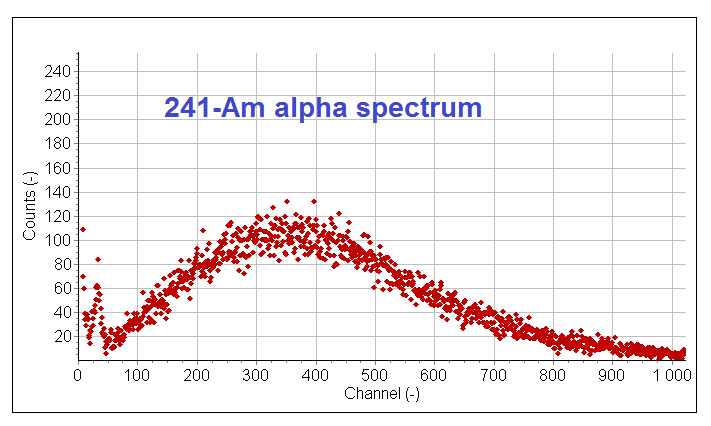
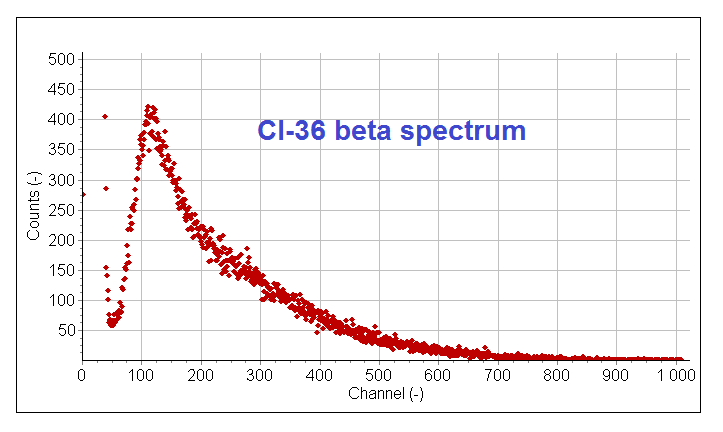
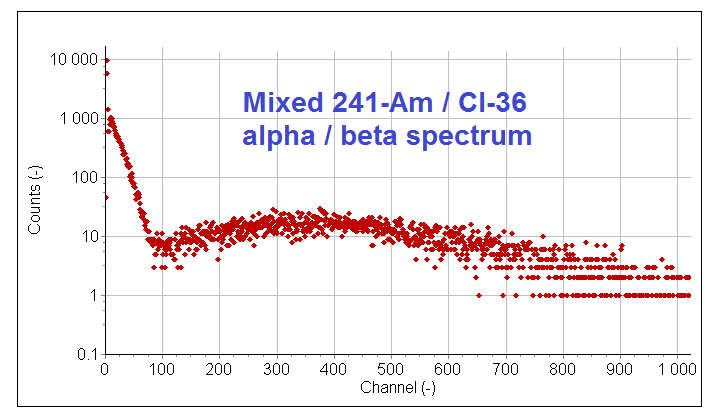
The figures below are measured spectra and discrimination data for this detector configuration, taken under alpha, beta, and mixed alpha/beta irradiation.
6Applications
The SiPM-Based Alpha/Beta Detector is suited for laboratory and field environments where simultaneous or separate alpha and beta surface activity measurements are needed. Representative applications include:
- Surface contamination surveys in nuclear facilities, decommissioning projects, and radiological laboratories
- Alpha/beta ratio determination for source characterization and isotope identification workflows
- Gross alpha and beta counting in water, air filter, and wipe sample analysis
- Field portal and personnel monitoring where a compact, battery-compatible probe is required
- Research and calibration using alpha reference sources (e.g., Am-241 at 5.48 MeV) and beta sources
- Environmental monitoring and regulatory compliance measurements
- Portable instrument integration with MCA, rate meters, and digital acquisition systems that accept preamplified output
7Ordering & Contact
The ScintIQ™ SiPM-Based Alpha/Beta Detector is available from Berkeley Nucleonics. Contact the applications team to discuss supply voltage compatibility, connector variants, cable length options, and integration with Berkeley Nucleonics MCA and readout electronics.
Model Information
| Reference | Description |
|---|---|
| 51BM0.25/SIP-EJ444-E3-X2 | Thin-model Alpha/Beta SiPM Scintillation Detector, ZnS(Ag)+plastic, Ø51 mm x 0.25 mm, SiPM Array J-60035-4P readout, integrated temperature-compensated bias and preamplifier, LEMO ERA0S302CLL output |
Drawing number: V-1611. Contact Berkeley Nucleonics for custom configurations, alternate scintillator sizes, or modified cable assemblies.